An automatic winding and tying machine winds wire onto a specific workpiece. Spindle speed control is needed to suit different coil-winding processes. Configurations vary with the application. Common spindle drives are AC motors, DC motors and servo motors, each with a different form of speed control.
Fully automatic winding and tying machines are essential in automated transformer work. Machine quality strongly affects results. The source describes stable winding quality comparable to imported equipment and a pass rate rising from 90% with manual winding to 99.9%. A mechanical tension indicator shows the winding tension in grams, avoiding differences caused by adjustments made by feel. Fine-wire payoff tensioners typically use spring-loaded friction plates that can meet requirements when carefully adjusted.
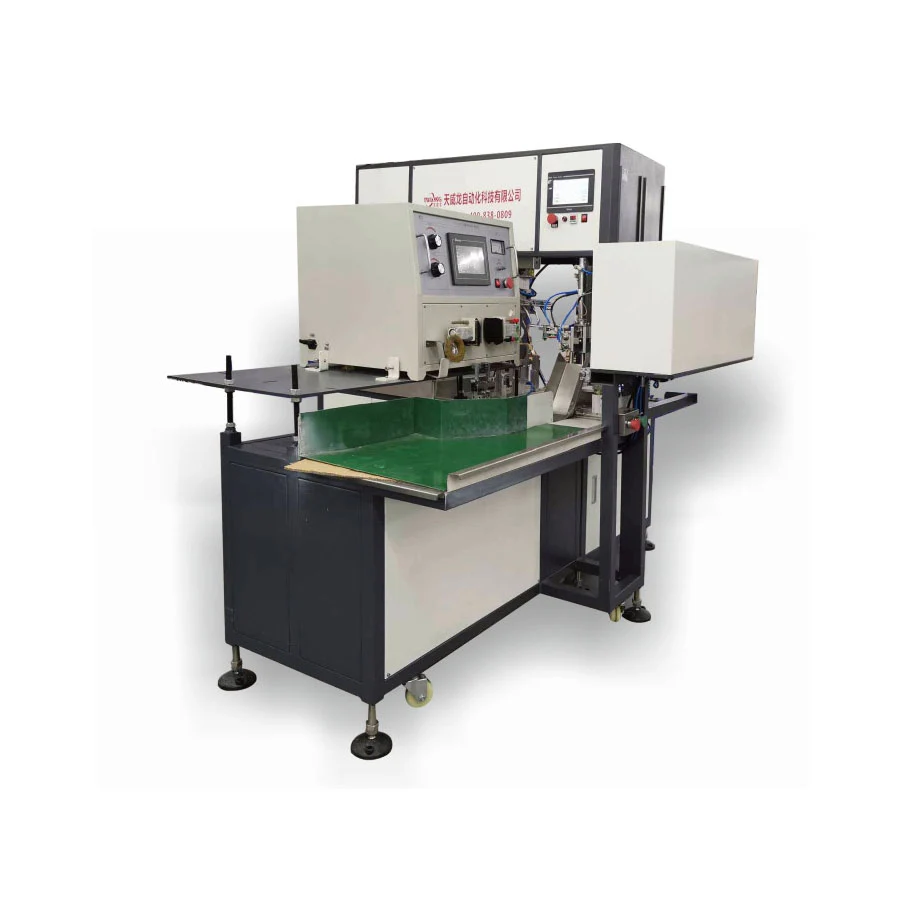
Winding equipment for electronic transformers needs to deliver good value under the intended operating conditions. Priorities may include price and cost or performance and efficiency. Electronic transformers are becoming lighter, thinner, shorter and smaller, particularly to reduce costs. Consider operating conditions, required functions, efficiency and cost. The workpiece shape affects the height and feed distance of the traverse mechanism. Winding a square workpiece too quickly may cause the middle to bulge and make the wire lay uneven. Fully automatic winding and tying machines have demanding quality requirements and have taken a leading role in this area of machinery.
1. AC motor speed control: the motor needs an external electromagnetic speed controller or a frequency inverter. In winding machines, an inverter controlled by the machine is common and can also save energy.
2. Servo motor speed control: a dedicated drive provides closed-loop control for precision movement. Constant torque and closed-loop operation meet high-precision coil-winding requirements.
3. DC motor speed control: a DC supply is needed to drive a DC motor. A DC speed control board or brushless driver controls it. The small motor size makes this option common in compact winders.